
Hill Cove Mountains National Park
The first national park in the Falkland Islands, a wild landscape with over 100 native plant species, rewarding those who seek solitude and an ‘off-the-beaten-path’ experience
Hill Cove Mountains National Park was designated in 2025.
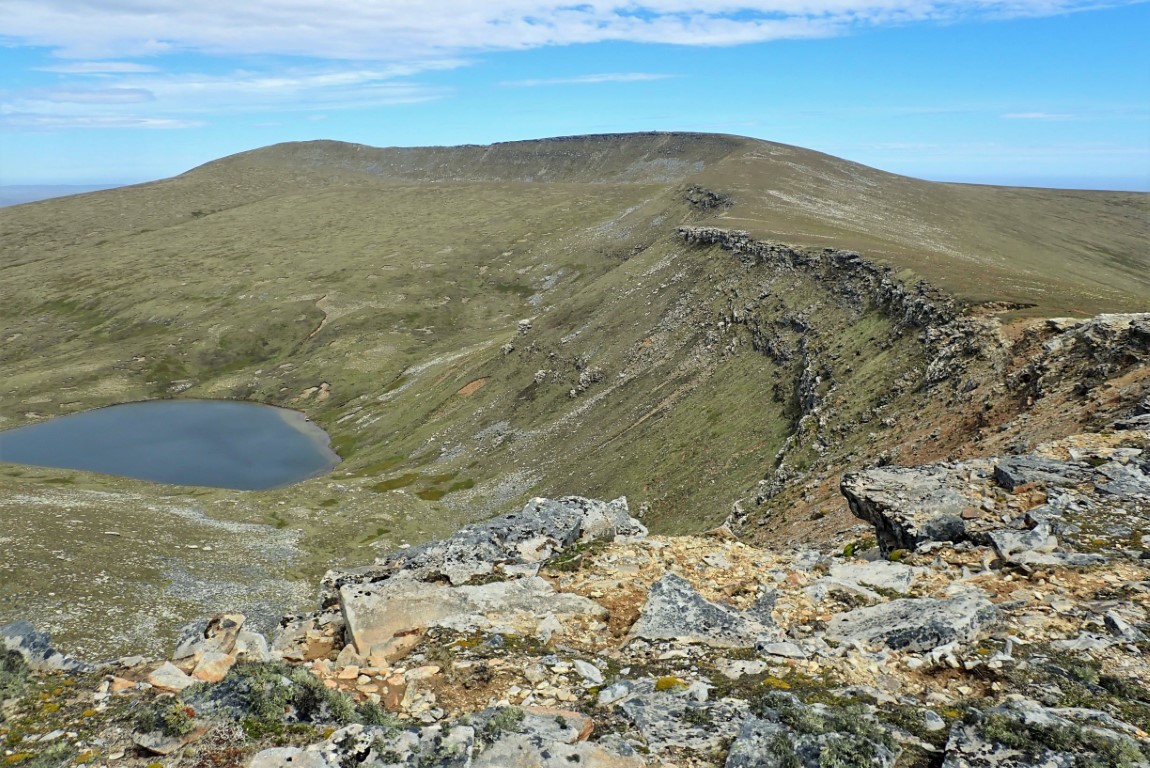
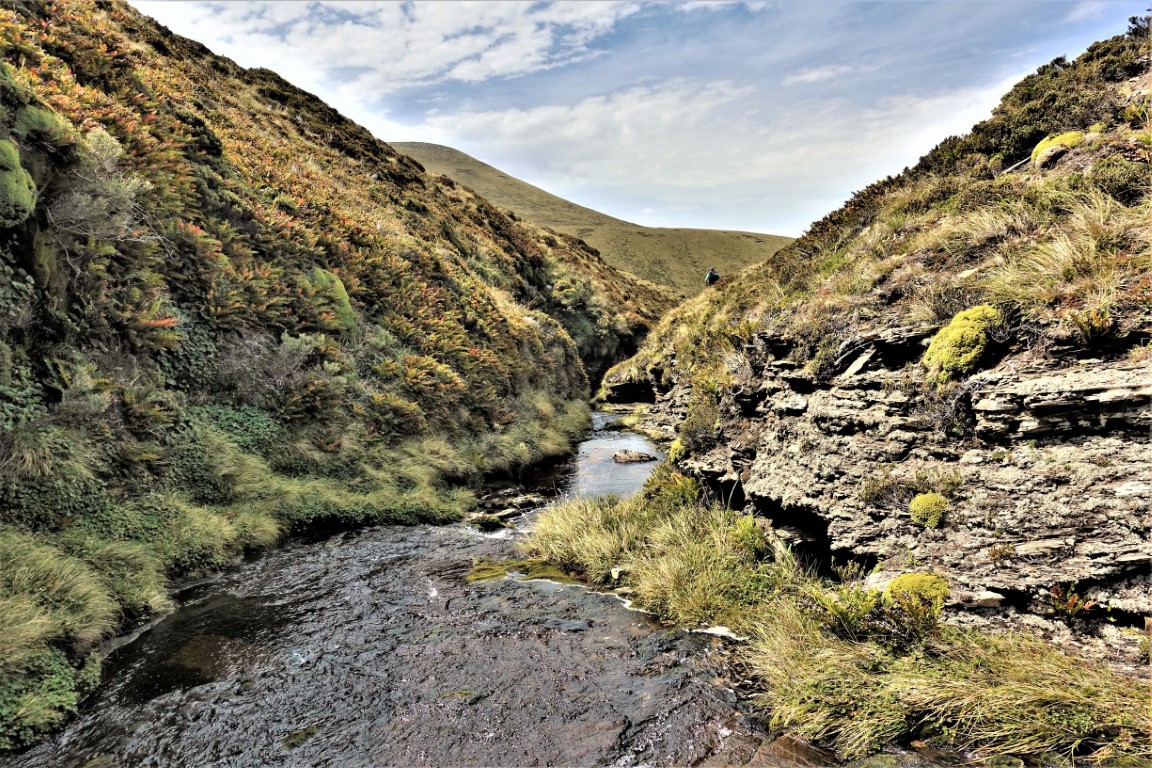
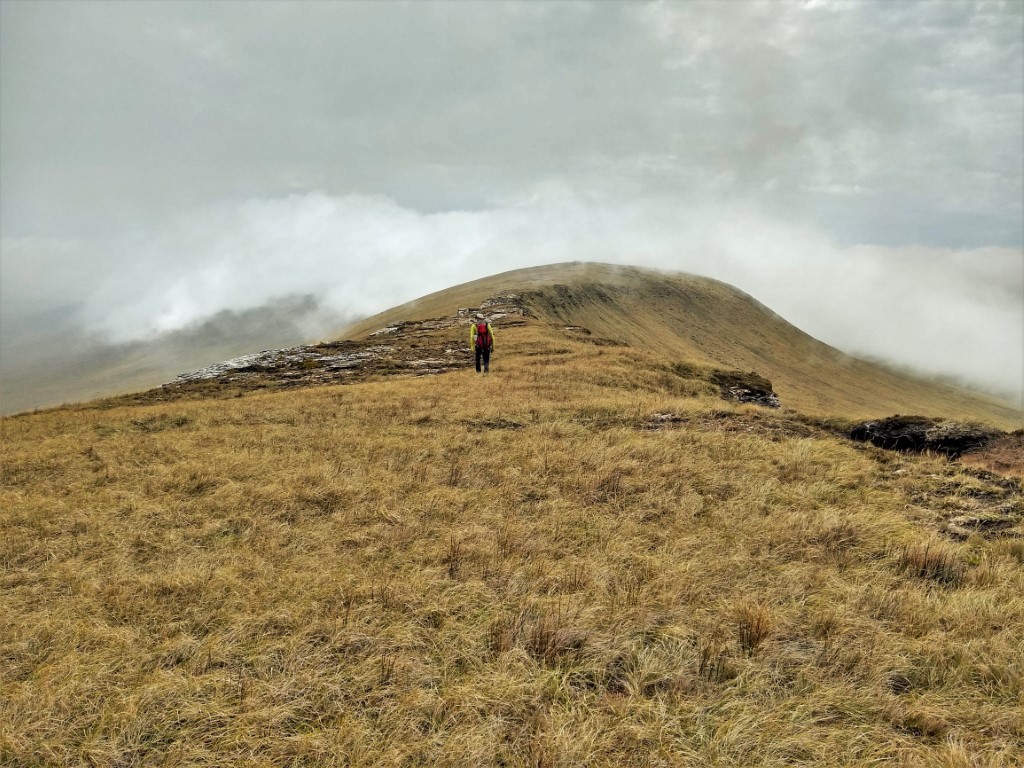
The rugged mountains tower up to 700m above sea level and contain the second and third highest peaks in the Falklands, Mount Adam and Mount Robinson, respectively. Among these high rocky peaks, the park also contains wetland-rich valleys coursing with streams, deep tarns and grasslands. If you venture to look more closely into these habitats, you’ll soon see one of the primary reasons that make this place so unique. Nestled within the mosaic of upland habitats are over half of the total species of native flora in the Falklands, including many of the country’s rarest. This biodiversity is how the Hill Cove Mountains became internationally recognised as an Important Plant Area (IPA) and has since been recognised as a national park.
How to access the park
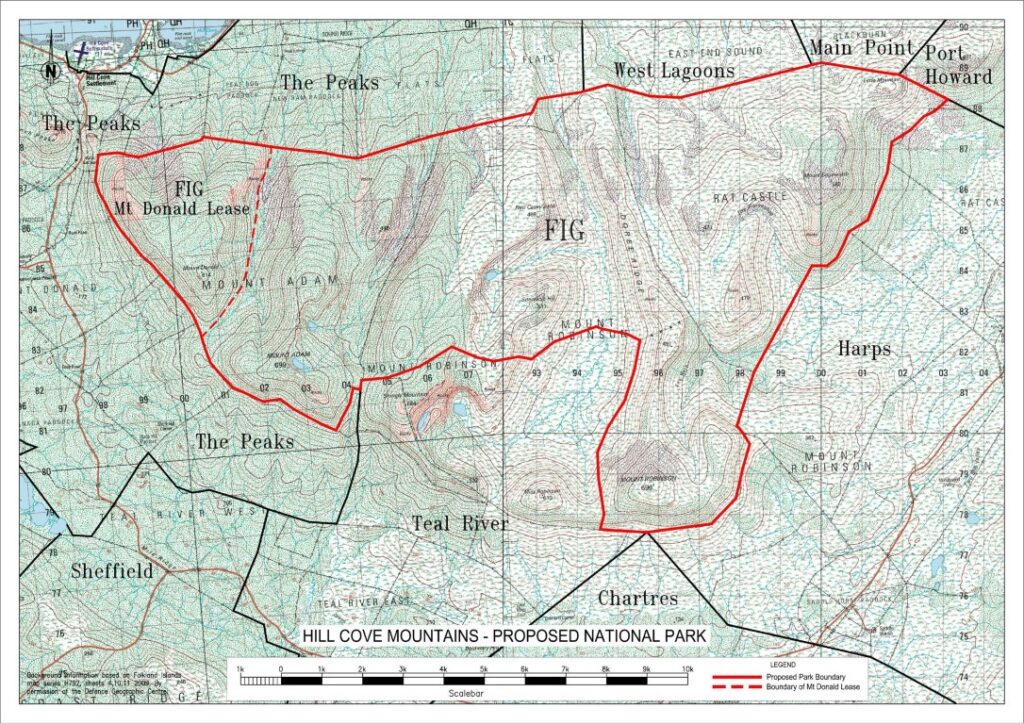
The national park is surrounded on all sides by privately-owned land. There is no public road leading directly into the park and 4×4 vehicle access is only available via informal private tracks.
Walking
The easiest access for those who would like to enjoy the park on foot is via the roadside at Hell’s Kitchen. This access can be found approximately 1 mile south of the Hill Cove settlement on the main road linking to the Fox Bay – Port Howard road. The boundary of the national park lies approximately 400m east of the roadside across privately-owned land.
A parking area, signage, and directional markers will be constructed in 2026. Until these are in place, please ask landowner permission prior to accessing the national park via this route.
4×4 and Horseback
For horse or 4×4 access, visitors are required to ask adjacent landowners for permission. Driving within the park is permitted, however there are no public tracks between the main roads and the park. Anyone wishing to take their vehicle into the park must seek permission from a neighbouring landowner. There are no roads in the park. Driving must only be undertaken by experienced off-road drivers with suitable four-wheel drive vehicles. Visitors are reminded to stay to existing 4×4 tracks and avoid areas which could lead to bogging.
Regulations
Please be aware that certain activities are not permitted within the national park. These include:
- Damaging, removing or defacing any artefacts, cairn, structure, memorial or cultural heritage site;
- Prospecting or exploring for or extracting any mineral;
- Smoking a cigarette, cigar, pipe or vape;
- Introducing non-native species; or
- Starting a fire (except for when utilising a small contained cooking stove and following the fire rules below).
Fire rules
*BBQs and campfires are banned in the national park at all times due to the high risk of wildfires*
Small, contained cooking stoves are permitted. However, these may only be used in rocky or sandy areas, free from vegetation or peaty soil, and the stove must never be left unattended until the fire is completely extinguished. Additionally, the person using the stove must ensure that:
- Adequate water is available to extinguish the fire from the stove after use;
- The fire from the stove does not spread; and
- In the case of fire from the stove spreading, that fire and any other fire cause by it, is extinguished.
Should a fire spread and become uncontrollable, call 999.
Camping Guidelines
We welcome camping within the park. However, we do remind campers to follow the Countryside Code and the fire rules to ensure the protection of biodiversity, and the safety and enjoyment of others.
Health, Safety, and Emergency Information
All users of the park do so at their own risk.
The national park is an area of remote, rugged, mountainous terrain without defined trails or routes. The park is a long distance from the nearest settlement and there are no emergency shelters. Injury, breakdown of vehicles, and quickly changing weather conditions (fog, wind, rain, snow) are all inherent risks and users must be well prepared.
To mitigate risks, it is recommended that users enjoy the park in groups of two or more and take appropriate provisions and equipment. Visitors should tell someone where they are going and an estimated time of completion, checking in again once they have returned. This applies to everyone, including those walking, on horseback, or driving.
Should an emergency arise, call 999
For more information, please contact
the Environment Department
Phone: +500 28449
Email: [email protected]